
Walk-In Tub vs. Walk-In Shower: Which Is Right for Your Aging Parent?
Here’s the short, honest version. Choose a walk-in shower when the goal is the safest, easiest entry — a low-threshold or zero-threshold base means there’s almost nothing to step over, which is the right call for balance trouble, a walker, or a wheelchair. Choose a walk-in tub when you love a warm soak and can still step over a low door — the built-in seat and warm water are kind to arthritis and sore joints.
Most Northwest Ohio families pick a walk-in shower for everyday safety. Those who bathe to ease pain lean toward a walk-in tub. There’s no universal right answer — only the right one for how you live. We’ll help you find it for free, in your own bathroom. No pressure, no gimmicks.
When a company spends 50 years on a single room of the house, it learns that room cold. That’s us. Founded by the Volmar family in 1971, Toledo New Bath builds bathrooms — and only bathrooms — for homeowners across Toledo and the greater Northwest Ohio region. Walk-in tub or walk-in shower is one of the biggest questions we help families answer, because the wrong choice means a beautiful bathroom that still doesn’t fit how someone actually moves.
So let’s keep it simple and honest — where good design meets good sense. What follows is the same plain-English comparison we’d walk you through at your kitchen table: safety, cost, installation, and daily life. No jargon. No pressure. Just the straight story, from people who live here and treat every bathroom like it’s going into their own home.
Quick Comparison: Walk-In Tub Vs. Walk-In Shower
Here is the short version, side by side. The sections below explain each row in plain language.
| Factor | Walk-In Tub | Walk-In Shower |
|---|---|---|
| Entry | Watertight door; step over a low (3–7 in.) threshold | Low-threshold or zero-threshold — little or nothing to step over |
| Best for | People who love soaking; arthritis and chronic pain relief | Balance issues, walkers/wheelchairs, anyone who prefers showering |
| Safety focus | Sit-down bathing on a built-in seat; grab bars | Eliminates the step-over fall risk; grab bars and seat optional |
| Soaking | Yes — full warm-water soak, often with jets | No — shower only |
| Footprint | Often fits the existing tub space | Flexible; works well even in small bathrooms |
| Typical install | Often 1–2 days for a standard replacement | Often 1 day for a conversion; longer for full remodels |
| Typical installed cost | $10,000–$18,000 | $10,000–$13,500 |
| Cleaning | Non-porous acrylic resists mold; a few more nooks | Non-porous acrylic resists mold; glass needs wiping |
Not sure which line matters most for you?
That’s exactly what our Age Safe® Certified specialists are for. We listen first, walk your bathroom, and give you a straight recommendation — free, in-home, and no pressure. Real local people who are easy to reach. Call 419-252-0762 — no 1-800 number, no answering service.
Walk-In Tubs: How They Work And Who They Help
What is a walk-in tub?
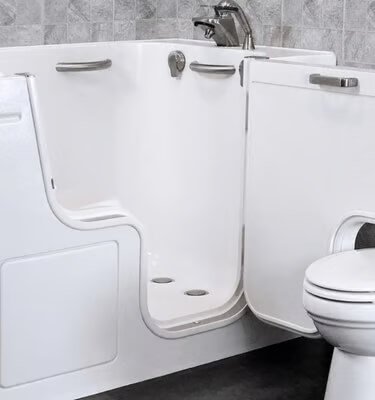
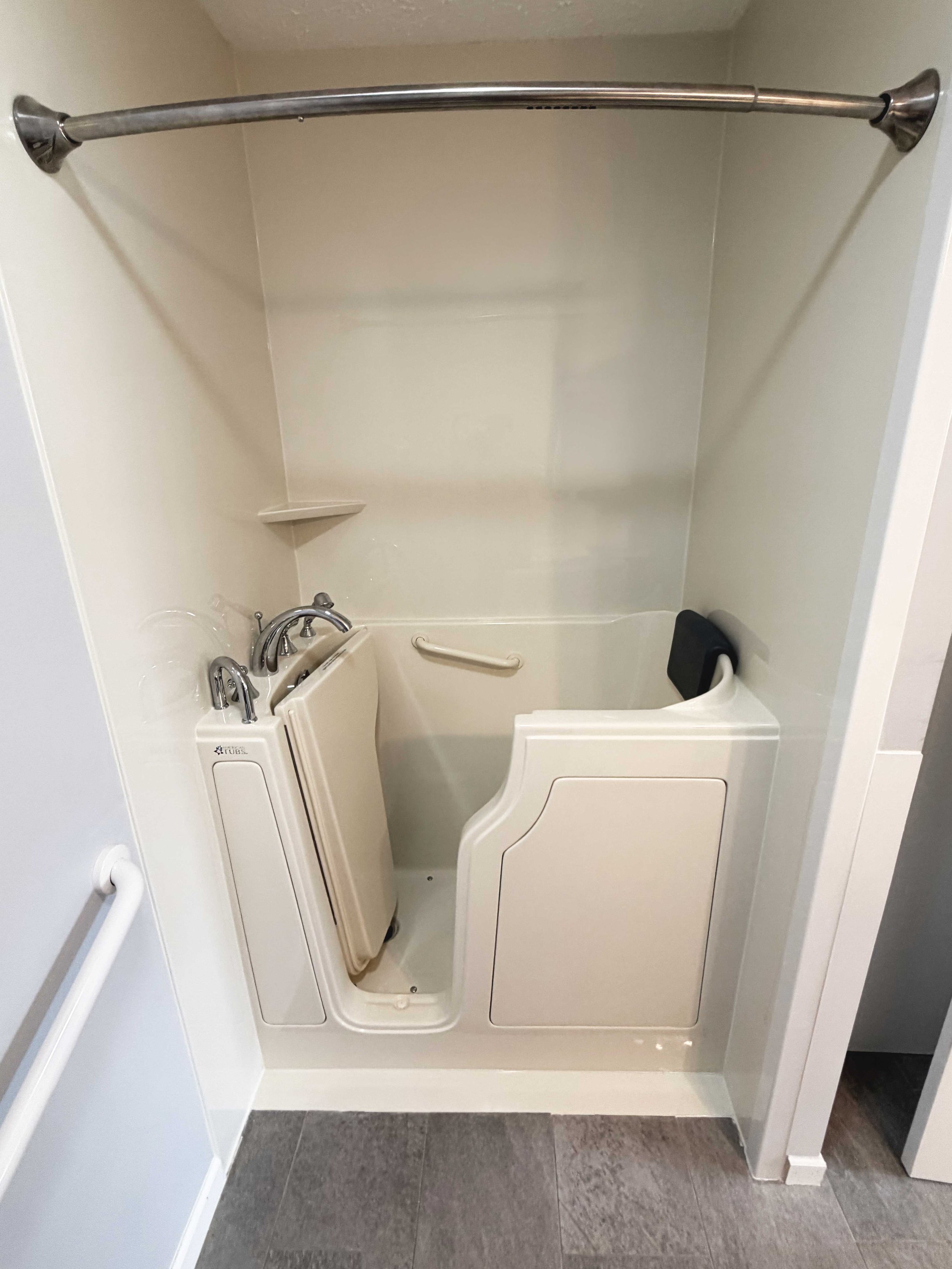
A walk-in tub is a deep bathtub with a watertight door built into the side. You open the door, step over a low threshold (usually three to seven inches instead of the 15-plus inches on a standard tub wall), sit down on a built-in seat, close the door, and fill the tub around you. When you are done, the water drains and you step back out. It keeps the comfort of a real bath while removing the dangerous part — climbing over a high tub wall.
Accessibility features that matter for seniors
Low step-over threshold and a wide, latching door so entry does not require lifting a leg high.
Built-in contoured seat at chair height, so bathing happens sitting down rather than lowering to the floor of a tub.
Grab bars placed for real-world reach, plus a slip-resistant floor.
Handheld shower wand and easy-reach controls.
Fast-drain system so you are not waiting in a cold, draining tub.
Optional hydrotherapy jets and a heated seat for arthritis, circulation, and sore joints.
Every one of these goes in by our own people — employee installers, never subcontractors — and it’s backed by a lifetime warranty. We’re craftsmen, not salesmen.
Who should choose a walk-in tub?
A walk-in tub is usually the better fit when the person:
Genuinely enjoys baths and would miss soaking if it went away.
Has arthritis or chronic pain that warm water and jets noticeably relieve.
Can comfortably and safely step over a low threshold and sit down.
Wants therapeutic features more than a fully step-free entry.
What a walk-in tub costs in Northwest Ohio
Most walk-in tubs in our area run $10,000 to $18,000 installed, depending on the tub model, hydrotherapy options, and whether plumbing or electrical work is needed. See the walk-in shower cost guide for a full breakdown, or learn what to look for in a walk-in tub.
Walk-In Showers: How They Work And Who They Help
What is a walk-in shower?
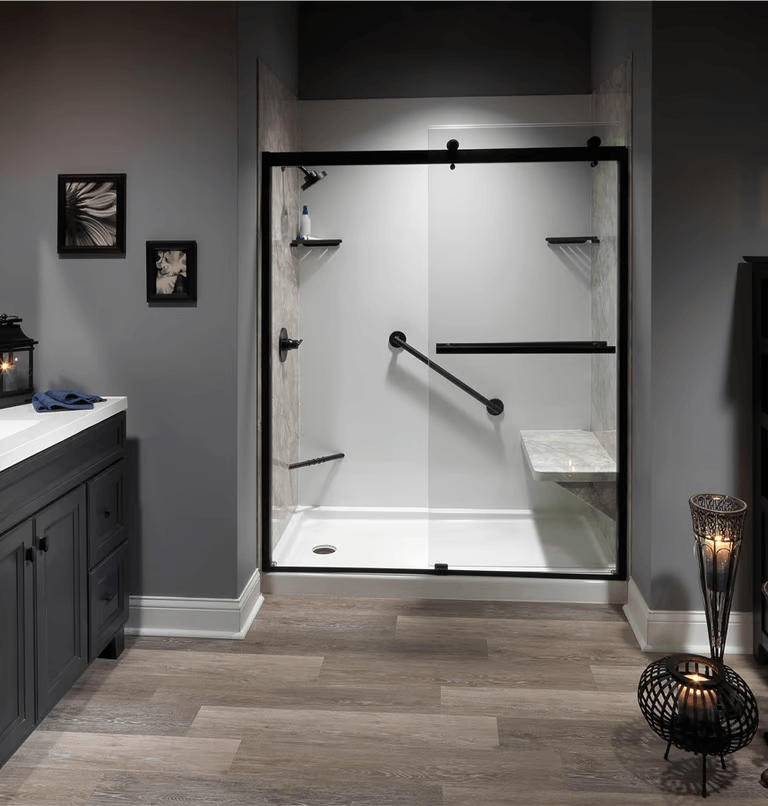
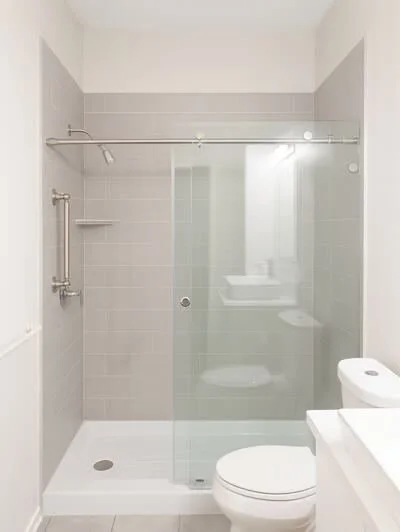
A walk-in (or “roll-in”) shower is a shower you step or roll straight into, with a low-threshold or zero-threshold base instead of a tub wall or a tall curb. Paired with slip-resistant flooring, grab bars, and an optional fold-down seat, it removes the single most common bathroom hazard for older adults: stepping over something to get in. Our showers use non-porous acrylic, Stone-Look acrylic, or Purostone wall systems that resist mold and mildew and wipe clean — no grout lines to scrub.
Accessibility features that matter for seniors
Low-threshold or zero-threshold entry so a walker or wheelchair can roll in and there is nothing to trip on.
Slip-resistant base engineered to drain quickly.
Grab bars at entry and seating points, anchored into reinforced walls.
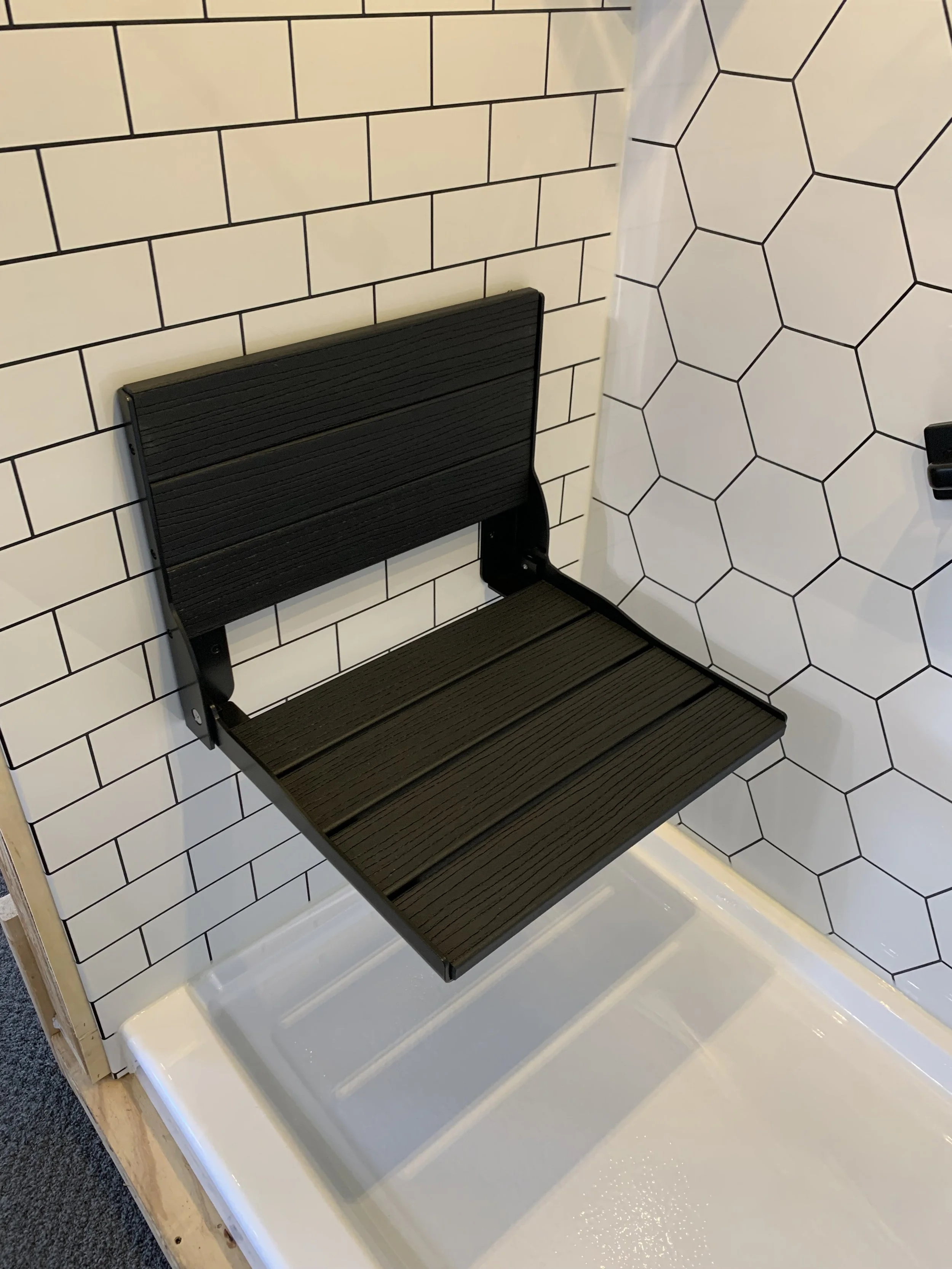
Fold-down or built-in seat for bathing while seated.
Handheld shower on an adjustable bar and comfort-height, easy-grip controls.
Mold-resistant acrylic walls that stay cleaner longer than tile and grout.
Who should choose a walk-in shower?
A walk-in shower is usually the better fit when the person:
Has balance issues, dizziness, or uses a walker or wheelchair — a zero-threshold entry is the safest option available.
Prefers showering to bathing, or showers daily.
Is recovering from or living with a hip or knee replacement, where standing and a flat entry are easier than lowering into a tub.
Has a smaller bathroom — a walk-in shower often makes better use of tight space.
What a walk-in shower costs in Northwest Ohio
Most accessible walk-in showers run $10,000 to $13,500 installed. The exact cost depends mainly on the wall system you choose, the accessibility features added, and any plumbing changes. For a tub-to-shower conversion, the price depends on your existing bathroom — request a free quote for an exact figure, and see the walk-in shower cost guide for full detail.
Head-To-Head: The Factors That Actually Decide It
Safety and fall risk
For pure fall prevention at the entry, the zero-threshold walk-in shower wins — there’s simply nothing to step over. A walk-in tub is far safer than a standard tub, but it still asks you to step over a low door and sit down inside a wet basin. The flip side: once seated, a walk-in tub supports the body fully in warm water, which some people find steadier than standing. The honest answer is that either option, fitted with grab bars and a seat, is dramatically safer than a standard tub-shower combo. Because a safer bathroom isn’t a luxury — for a lot of families, it’s the difference between independence and risk. It’s comfort, dignity, and peace of mind.
Cleaning and long-term upkeep
Both options use non-porous acrylic systems that resist mold, mildew, and staining — a major upgrade over tile and grout, which trap moisture and need constant scrubbing. A walk-in tub has a few more components (door seal, jets) to wipe down. A walk-in shower with a glass panel needs an occasional squeegee. Neither is high-maintenance, and both are designed to stay cleaner, longer.
| Condition | What usually fits best |
|---|---|
| Arthritis / chronic pain | Walk-in tub — warm water and jets relieve joints; seated bathing reduces strain |
| Balance problems / vertigo | Zero-threshold walk-in shower — removes the step-over and allows a seat plus grab bars |
| Hip or knee replacement | Walk-in shower — flat entry and standing or seated showering is easier than lowering into a tub |
| Walker or wheelchair use | Roll-in walk-in shower — the only option that allows wheeled entry |
| Loves baths, generally mobile | Walk-in tub — keeps the soak while removing the high tub wall |
Resale value and your home
Accessible bathrooms increasingly appeal to buyers, not just current owners — Northwest Ohio has an aging population, and a safe, modern, step-free bathroom is a selling point. A zero-threshold walk-in shower tends to have the broadest appeal because it reads as both contemporary and universally usable. A walk-in tub is more of a specialty feature: wonderful for the right buyer, less universal. For most homeowners, the decision should be driven by daily safety and comfort first; resale is a secondary bonus.
Can You Have Both A Walk-In Tub And A Walk-In Shower?
Yes — and there are a few ways to get the best of both. Many walk-in tubs include a handheld shower wand and a diverter, so you can shower while seated inside the tub. If the bathroom has room and the budget allows, some homeowners install a walk-in tub and a separate walk-in shower. And a roomy walk-in shower with a built-in seat and handheld wand covers most “I still want to be able to wash easily while sitting” needs without a second fixture. During your free assessment, we will measure the space and tell you honestly what fits.
A Quick Decision Checklist

Answer these five questions. If you lean “tub” on most of them, a walk-in tub is likely your fit; if you lean “shower,” go that direction — and if you are split, the in-home assessment will settle it.
Do you (or your parent) love soaking in a bath, or mainly shower? (Soak → tub. Shower → shower.)
Is the biggest safety concern stepping over things, or standing for long? (Step-over → zero-threshold shower. Standing → tub with seat.)
Do you use — or expect to use — a walker or wheelchair? (Yes → roll-in shower.)
Would warm-water and jets for arthritis or circulation make a real difference? (Yes → tub.)
How much bathroom space do you have? (Tight → shower often fits better.)
What About Cost — And The Truth About Financing
Cost shouldn’t be the thing that keeps someone in an unsafe bathroom, and with us it usually isn’t. We offer 0-0-0 financing: 0 down, 0 interest, and 0 payments for 18 months for qualified homeowners — no finance tricks dressed up as discounts, just an honest way to make the bathroom safe now and pay over time. Many families also use a home equity line of credit (HELOC), and eligible veterans may qualify for VA home-modification grants. It’s all spelled out on our financing page, and the walk-in shower cost guide walks through VA benefits, Ohio assistance programs, and budgeting in detail.
How To Decide: Your Free In-Home Assessment
The fastest way to know is to have someone who installs both look at your actual bathroom. Our specialist listens first, measures, talks through the person’s mobility and daily routine, and recommends the safest fit — with a clear written quote and zero gimmicks. We’re local: real people who live and work here, two Toledo showrooms (with a third on the way), a lifetime warranty, and a Best Price Guarantee. No 1-800 numbers. No answering services. If you’re calling 1-800, you’re paying too much.
Request your free bathroom accessibility assessment
Call 419-252-0762 or schedule online. Or stop by our Reynolds Road or Bennett Road showrooms and try a walk-in tub and walk-in shower for yourself.
Frequently Asked Questions
-
Yes. Many walk-in tubs include a handheld shower, you can install a roomy walk-in shower with a seat, or — if space and budget allow — add both fixtures. We will tell you what fits during a free assessment.
-
Original Medicare generally does not cover walk-in tubs or showers, as they are considered home modifications rather than durable medical equipment. Some Medicaid home- and community-based services (HCBS) waivers in Ohio may help with medically necessary modifications, and eligible veterans may qualify for VA grants. Coverage varies by program and situation — our team can point you to the right resources.
-
Our acrylic systems are non-porous, durable, and built to last for years of daily use, and every Toledo New Bath installation is backed by a lifetime warranty on the system.
-
No. They are popular with anyone who wants a safer, easier, lower-maintenance bathroom — including people recovering from surgery, those with chronic conditions, and homeowners who simply prefer a clean, modern, step-free space.
-
Many tub and shower replacements are completed in as little as one day. A full bathroom remodel with new flooring, layout changes, or accessibility upgrades takes longer; we give you a realistic timeline with your quote.
Ready To Order?
Whether you're looking to order a walk-in shower or walk-in tub, or just want to reach out to learn more, we’ve got you covered.